01.03.01
The Scene as a Unit
A scene is not a place or a conversation. A scene is a change.
- Storytelling
- Screenwriting
- Directing
The Idea
Someone wants something. Something is in the way. They try. Something changes.
Until now you have been working one frame at a time: what is inside the rectangle, and what it makes a viewer feel. This lesson asks a different question. Put your frames in an order and read across them. Is anything actually happening, or have you made a set of good-looking pictures that sit beside each other?
The most useful test is simple. Someone wants something. Something makes getting it difficult. They try something. The situation changes. That is not a screenplay formula to fill in — it is a way of noticing whether your scene moves. Plenty of great scenes are quiet, ambiguous, or barely resolve at all. What they tend to share is that the end is not the same as the beginning, and you can see why.
Watch for causation, not just order. 'This happened, then this happened' is a list. 'This happened, so this happened' is a scene. The clearest sign that a scene is working is that you can point to a moment where it changes direction — a turn — and say what was true before it and what is true after.
Beginners usually put the change in the caption. Someone writes 'she realises he has been lying' under a frame of a face. The frame does not show a realisation; the sentence does. Your job in this lesson is to move the change out of the notes and into the order of the images.
Watch
Watch the scene, not the film. Ten minutes is enough — you're studying a decision.
Whiplash
Damien Chazelle · 2014
The first rehearsal with Fletcher
A clear objective, an obstacle that keeps escalating, and a precise turn you could timestamp.
Tokyo Story
Yasujirō Ozu · 1953
The parents sent up to the hot springs
Almost nothing is declared, and the situation still changes completely. Quiet is not the same as static.
No Country for Old Men
Joel and Ethan Coen · 2007
The coin toss at the gas station
Two people, one counter, no explanation. Watch what each of them tries when the previous tactic fails.
Fish Tank
Andrea Arnold · 2009
Mia dancing alone in the empty flat
One person, one room, no dialogue. A want, an interruption, and an ending state that is unmistakably different.
Break It Down
Five frames FILMCRAFT shot for this lesson, in the order they are meant to be read. Read them as one scene, then check your reading against the questions under each frame.
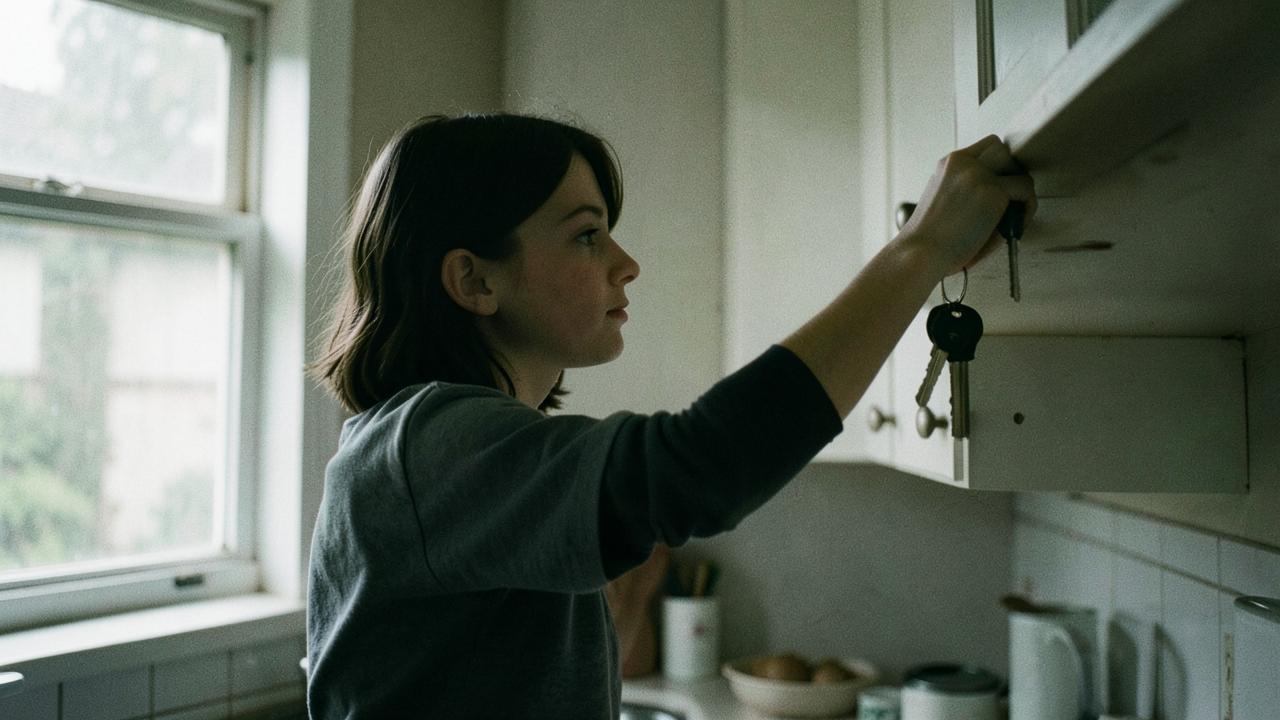
Frame 1 — original FILMCRAFT study frame, shot for this lesson. Frame 1
The want, made physical
She is reaching for keys that are not hers to take. Nobody says so. The want is in the stretch of the arm and the fact that her eyes never leave the keys.
- What they want
- The keys — and therefore the car, and therefore the evening.
- What the audience learns
- There is something she wants and a reason she is doing it quickly.
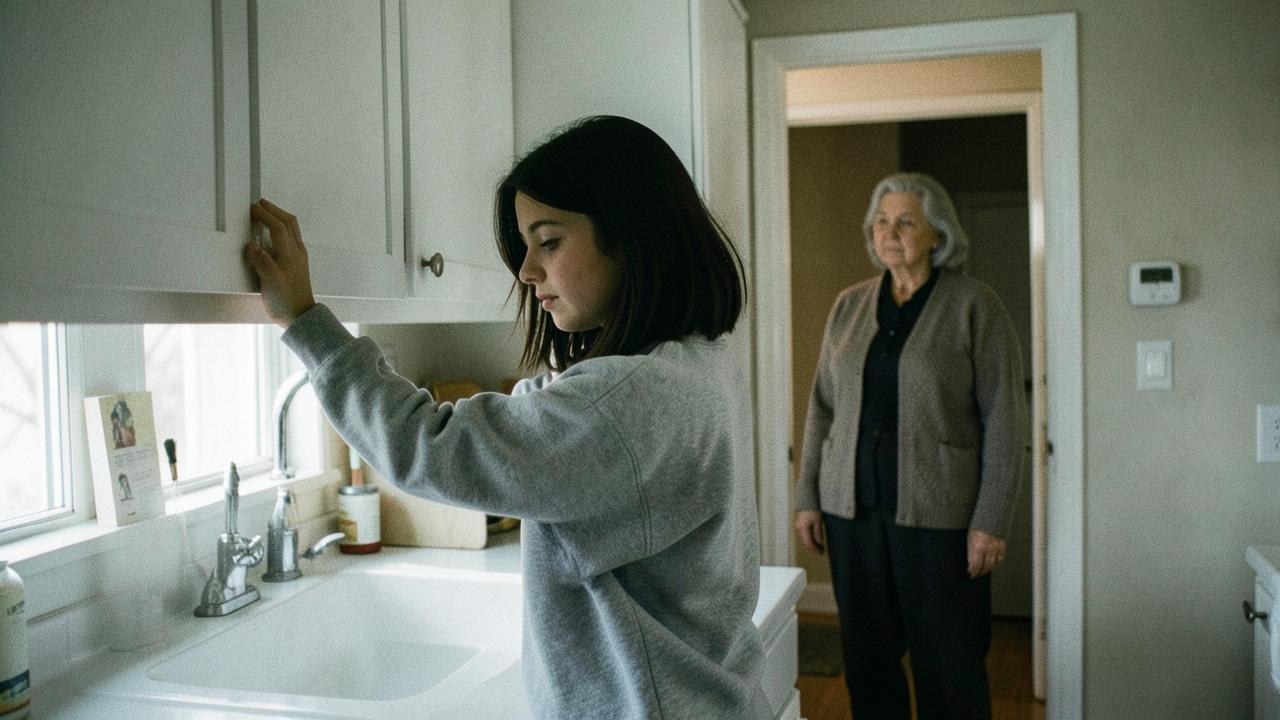
Frame 2 — original FILMCRAFT study frame, shot for this lesson. Frame 2
The obstacle arrives
Someone is in the doorway. The hand has already started to come down. The obstacle is not a locked box; it is being seen.
- What changed
- The attempt becomes impossible while she is being watched.
- What the audience learns
- Whatever she is doing, she does not want this person to know about it.
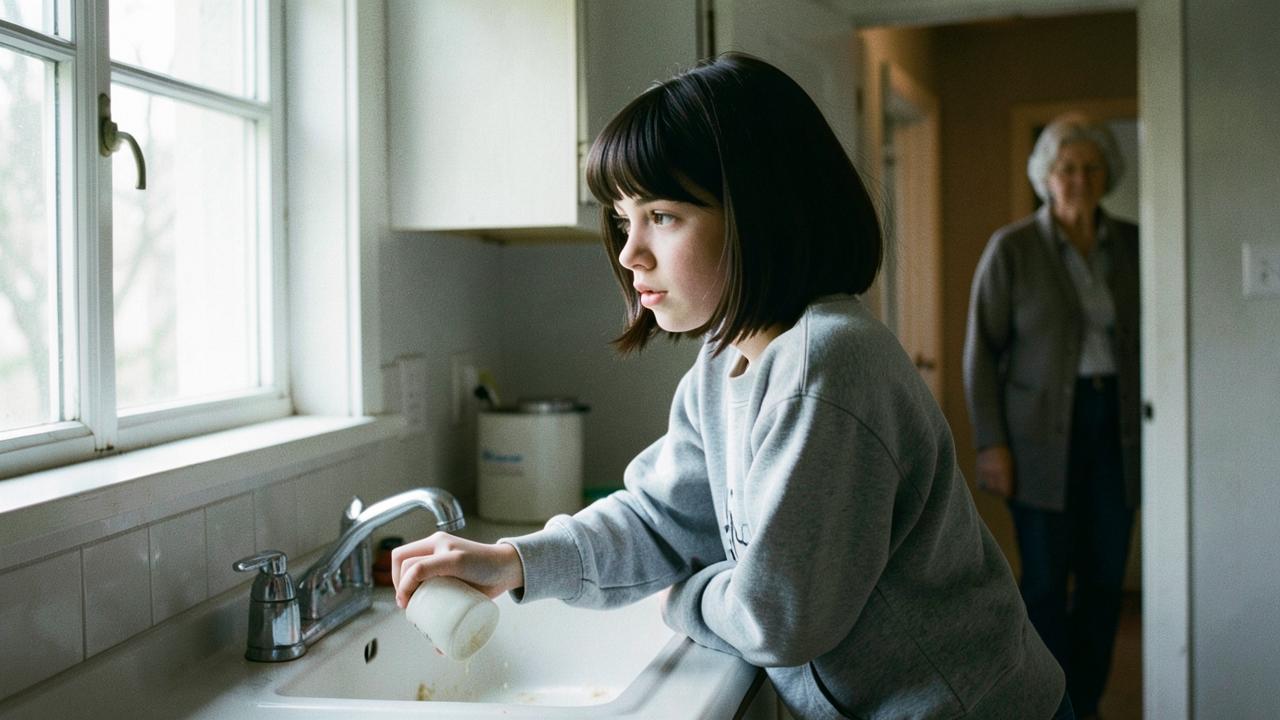
Frame 3 — original FILMCRAFT study frame, shot for this lesson. Frame 3
A different tactic
She has switched from taking to performing. Washing a cup is a cover story told with her body. Her eyes go sideways, not to the sink.
- What the tactic change is
- From direct grab to waiting the other person out.
- What the audience learns
- She is willing to be patient, which tells us how much she wants it.
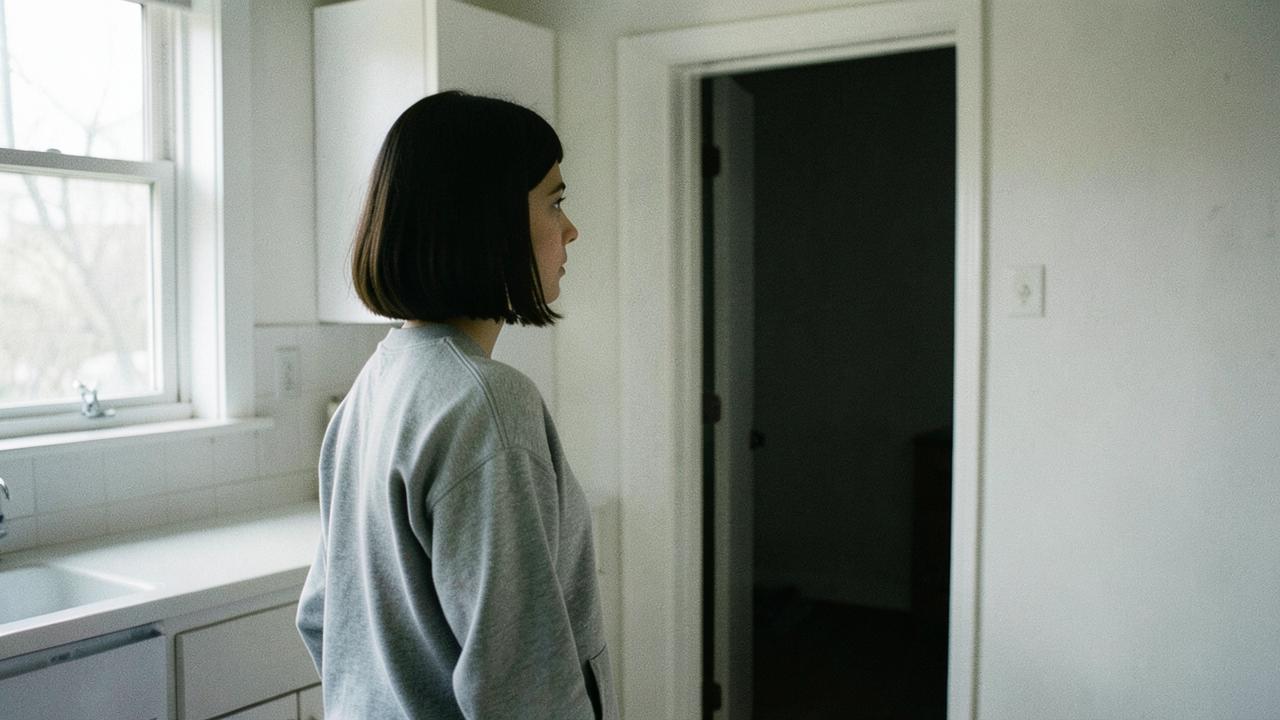
Frame 4 — original FILMCRAFT study frame, shot for this lesson. Frame 4
The turn
The doorway is empty. The obstacle has removed itself, which means the choice is now entirely hers. This is where the scene changes direction: the question stops being 'can she?' and becomes 'will she?'
- What changed
- The external obstacle is gone; an internal one replaces it.
- Who holds the power now
- She holds all the power in the room for the first time — and it is less comfortable than being stopped.
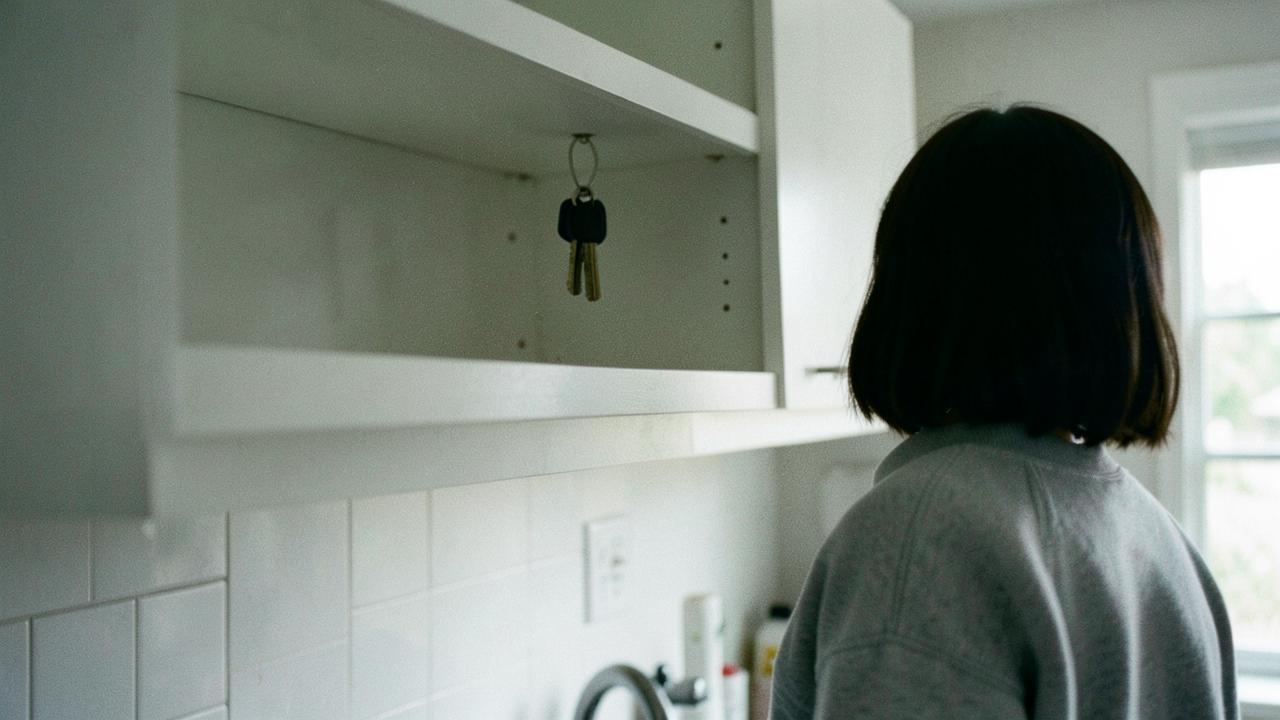
Frame 5 — original FILMCRAFT study frame, shot for this lesson. Frame 5
The ending state
The keys are still hanging there. Nothing has been taken and nothing has been said, but she is now standing in front of them in the open rather than reaching in secret. The situation is different even though the object has not moved.
- What changed
- The secrecy is over; the decision is not.
- What the audience learns
- An ending state can be a change of position rather than a change of outcome.
Frame Lab
Visual mission
Find three to five moments where a scene changes direction.
For each turn: what was true before, what is true after, what caused it, and what the character does differently once it lands.
FILMCRAFT stores your observations and source links — never other people's images.
Try It
Want / Block / Change
30 minutesMake exactly three ordered frames. Frame 1: someone clearly trying to get, reach, avoid, discover, hide or accomplish something. Frame 2: something makes it difficult. Frame 3: the situation is meaningfully different. No dialogue, no captions.
Exactly 3 frames.
Constraints
- Exactly three frames — no more, no fewer
- No dialogue, captions or on-screen text
- The want has to be visible in behaviour, not only in your notes
- Working alone is fine: your own hands, an object, a shadow or a reflection can carry all of it
Deliverable
Three ordered frames, plus one sentence naming the want and the obstacle.
Make It
The Turn
90 minutesBuild a scene out of five to eight ordered frames. One objective, one real obstacle, at least one change of tactic, one identifiable turning point, and a final situation meaningfully different from the opening. Submit the frames in the order they should be read.
Between 5 and 8 frames.
Constraints
- Five to eight frames, submitted in reading order — the order is part of the work
- Each frame should do a job the previous frame did not already do
- The turn must be visible in the frames, not explained afterwards
- Ambiguity is allowed; unexplained events are not the same as mystery
Deliverable
An ordered set of 5–8 frames, plus a line on where you think the turn lands.
AI Lab
The traditional workflow
You work out a scene by walking it: writing a beat sheet, shooting a rough version, then cutting it until you can see where it turns. The understanding comes from the failed versions.
What AI changes
Text models are reasonable sparring partners for structure — they will happily tell you where a described scene seems to turn, or which beat looks redundant. Image models are much weaker here: they generate attractive isolated frames and have no reliable sense of cause and effect across a sequence.
Try it
Describe your Make It sequence frame by frame in plain text, without saying what it means. Ask a model what it thinks the character wants and where the scene turns. If its answer is not yours, the sequence is doing something different from what you intended — that gap is the note.
Compare
Set the model's reading beside your own intention. The useful question is not who is right; it is which beats both of you agree are carrying the change, and which frame neither of you can justify.
Ethics check
Use models to test whether your story reads, not to write the story. If a scene's meaning only exists because a model described it, the scene does not have that meaning yet.
Sign in to sketch reference frames for this lesson.
- bookStoryRead only the chapters on the scene and the beat. Treat the rest as one opinion among many.reviewed 2026-09-12
- bookOn Directing FilmSevere, argumentative, and very good on telling a scene through what a camera can see.reviewed 2026-09-12
Reflect
Go Deeper
film
Fish Tank
Andrea Arnold · 2009
Watch any single scene twice: once for what is said, once for what changes.
film
Tokyo Story
Yasujirō Ozu · 1953
Proof that a scene can turn without anyone raising their voice.