01.01.02
The Cut
Two images touching create a third idea.
- Editing
- Storytelling
What the Instructor can readThe Instructor reads your frames in the order you give them. It cannot assess movement, performance timing or sound from stills. This lesson's feedback rubric is new and has not been reviewed by an instructor yet.
The Idea
The meaning isn't in either image. It's in the join.
Put a face next to a bowl of soup and the audience reads hunger. Put the same face next to a coffin and they read grief. The face never changed. This is the oldest experiment in cinema and it still runs the whole art form.
A cut does three jobs at once. It moves you somewhere — a new place, time or scale. It compares — the second image is always read against the first. And it asserts a relationship: because of this, then that. Beginners only use the first job and wonder why their films feel like slideshows.
One honest limit up front: this lesson works on ordered still pairs, not timed editing. Rhythm, pace and sound are real editing craft and they come later, in Learn to Finish. What you can learn today — with two photographs and no software — is what the join itself does.
Watch
Watch the scene, not the film. Ten minutes is enough — you're studying a decision.
The Godfather
Francis Ford Coppola · 1972
The baptism intercut with the murders
Two unrelated places forced into one idea by cutting alone. Neither half means what it means on its own.
2001: A Space Odyssey
Stanley Kubrick · 1968
The bone thrown into the air
A single cut jumps millions of years and claims the two objects are the same thought. Match on shape, not on story.
Whiplash
Damien Chazelle · 2014
Rehearsal, cutting between hands, face and conductor
The cutting does the arguing: every return to the conductor's face reframes the playing as judgement.
Break It Down
Two frames, in order. Read frame one alone. Then read frame two alone. Then read what appears when they touch.
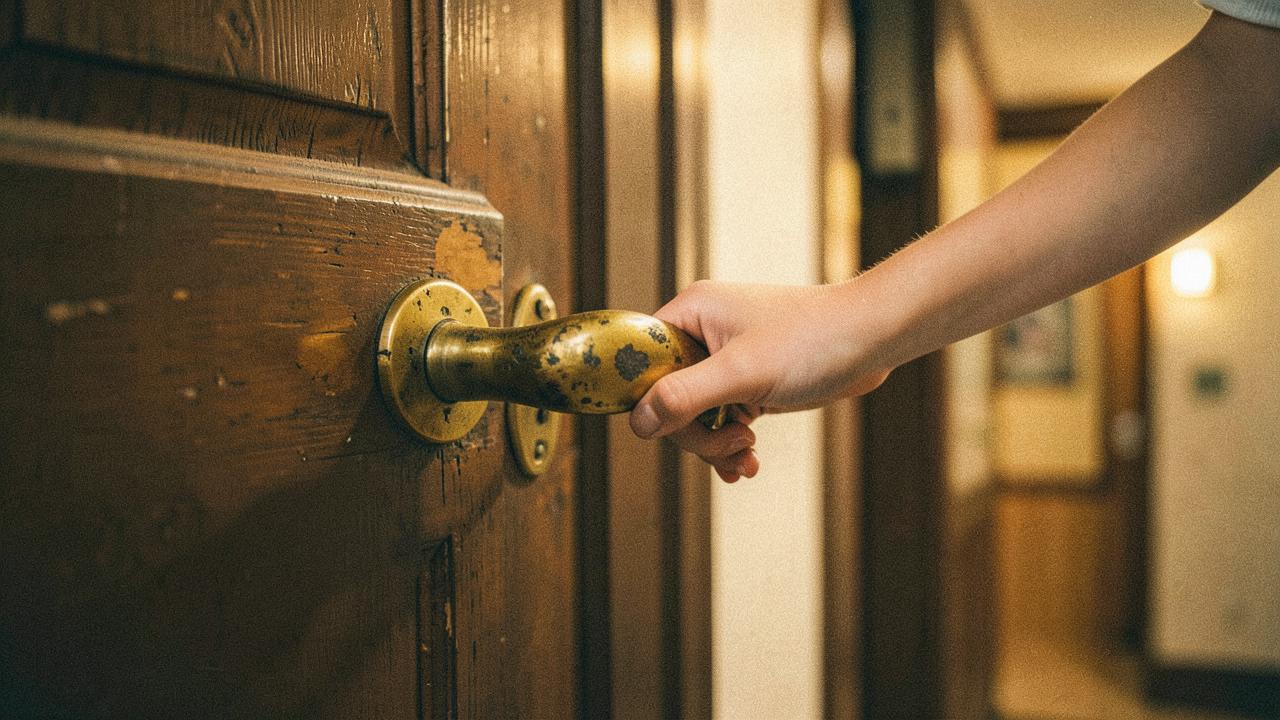
Frame 1 — original FILMCRAFT study frame, shot for this lesson. Frame 1
Frame 1 — a hand on a door handle
Close, warm, shallow focus. On its own it is an ordinary gesture: someone is about to go in or come out.
- What the audience learns
- Someone is at a threshold. Neutral until the next frame arrives.
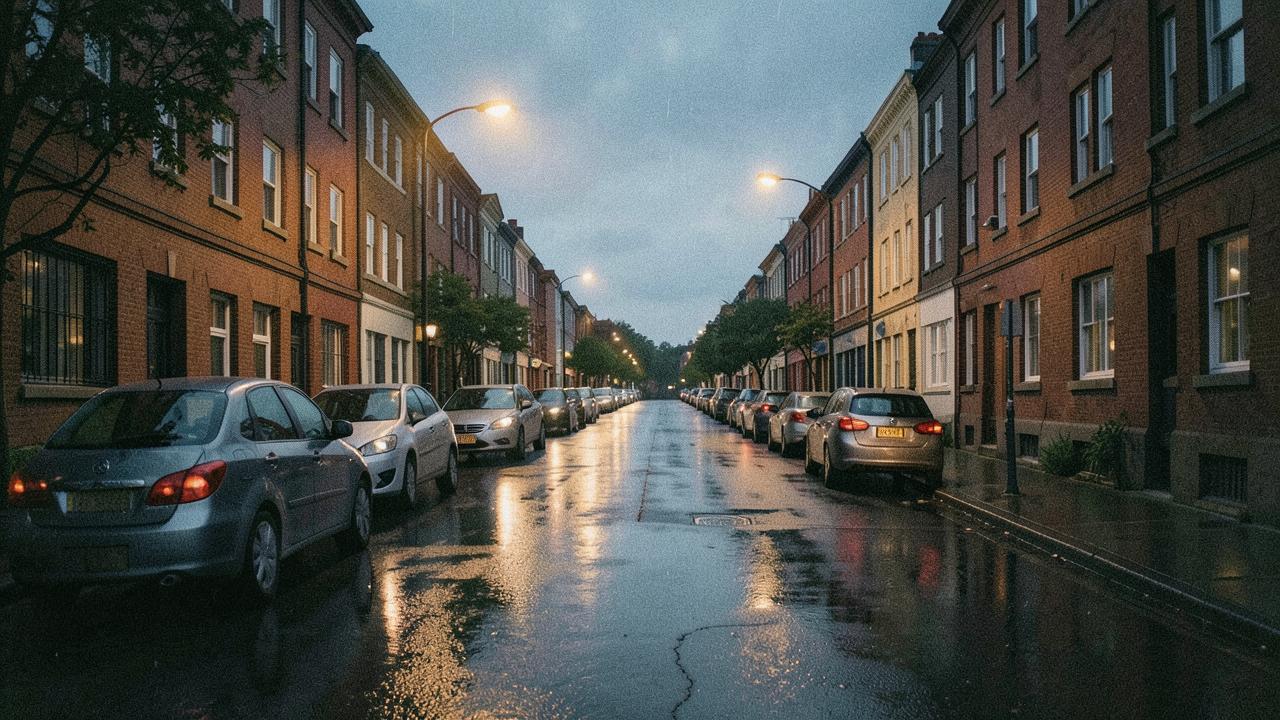
Frame 2 — original FILMCRAFT study frame, shot for this lesson. Frame 2
Frame 2 — an empty wet street at dusk
Wide, cold, nobody in it. On its own it is a location. Pleasant, even.
- What the audience learns
- Time has passed, or place has changed. Still neutral on its own.
Frame 3
The join
Together the street stops being a location and becomes what is on the other side of the door — or what the person left. The emptiness reads as consequence. Reverse the order and the same two frames read as someone coming home instead of leaving.
- What the audience learns
- Order is meaning. Nothing in either photograph changed.
Frame 4
What a beginner would do
Add a third frame to explain the join — a face, a caption, a clock. The explanation usually kills the idea the cut had already made.
Frame Lab
Visual mission
Find four cuts where the second shot changes the meaning of the first.
Write the idea the join creates in one sentence. If your sentence only describes shot two, look again.
FILMCRAFT stores your observations and source links — never other people's images.
Try It
Kuleshov, Twice
25 minutesPhotograph one genuinely neutral image, then a second image that — placed after it — gives the first a specific meaning. Submit the pair in reading order. This is an ordered still exercise about the join; it does not evaluate timing, motion or sound.
Exactly 2 frames.
Constraints
- The first frame must stay neutral — no acting, no signposting
- Exactly two frames; no captions and no text inside the images
- You may not re-shoot the first frame to suit the second
- Frame 2 must add or revise information from frame 1
Deliverable
Two ordered stills, plus one sentence naming the idea the join creates.
Make It
Reverse the Join
70 minutesMake a pair of frames whose meaning genuinely flips when the order flips. Submit them in the order you prefer, and use your note to say what the other order would have claimed. A still-sequence exercise: pacing and sound are not part of this assignment.
Exactly 4 frames.
Constraints
- Exactly two frames, submitted in your chosen order
- Both orders must produce a defensible meaning
- No captions, no on-screen text, no dialogue
- One transition clarifies, one complicates
- Revise by replacing or reordering, never by adding a fifth frame
Deliverable
Two ordered stills, plus your reading of both possible orders.
AI Lab
The traditional workflow
Editors learn joins by trying them: swapping two shots, watching a room react, and noticing which version makes people lean in.
What AI changes
A vision model can describe what is in each of your frames, and can often guess the relationship you intended. What it cannot do is feel a cut, because a cut is partly about time and surprise — and it is not watching your film, it is reading two pictures.
Try it
Show the Instructor your pair in both orders and read the two critiques side by side. Where does it agree with you about the meaning? Where does it invent a link you did not intend?
Compare
Write down one reading the engine had that you consider wrong, and defend your version in a sentence. Disagreeing well is the skill here.
Ethics check
FILMCRAFT does not evaluate timing, motion or sound, and will not pretend to. If a critique of yours claims to feel rhythm in two still frames, treat that as a fault and say so in your response.
Sign in to sketch reference frames for this lesson.
- bookIn the Blink of an EyeShort, and the best thing written on why a cut works at all.
- articleThe Kuleshov effectThe original montage experiment, and the century of arguments about what it proves.
Reflect
Go Deeper
book
In the Blink of an Eye
Walter Murch
Read the six criteria for a good cut. Argue with the order he puts them in.
film
2001: A Space Odyssey
Stanley Kubrick · 1968
Watch the first twenty minutes for joins between images that share shape rather than story.